About

Updated: 15/04/2026

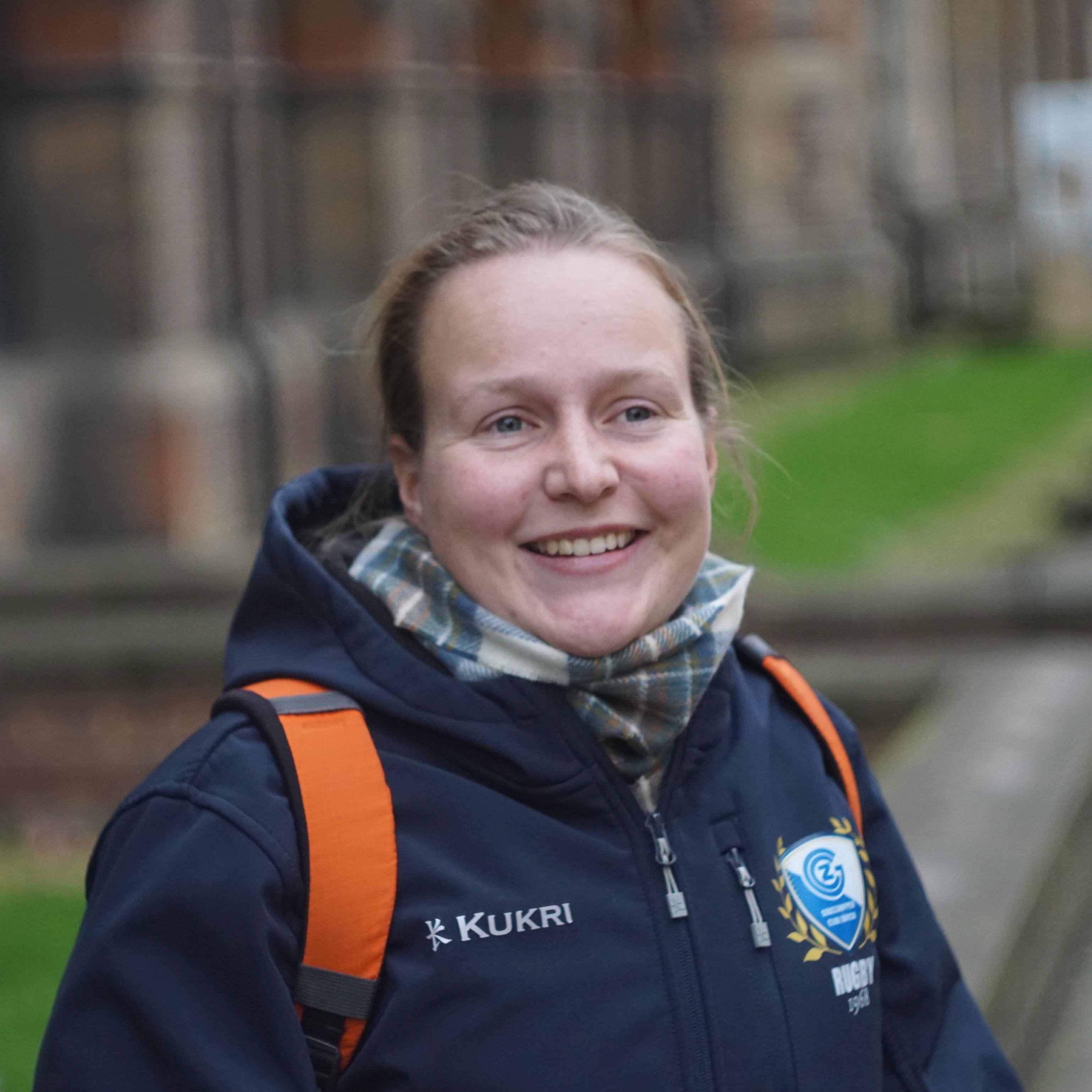
Hej, everyone! I’m Floor van Donkelaar, a computational astrophysicist studying the formation of galaxies and stellar systems in the early Universe. I am currently a Herchel Smith Postdoctoral Research Fellow at the Institute of Astronomy and the Kavli Institute for Cosmology in Cambridge.

Main research interests: The formation and evolution of galactic components in disc galaxies at high redshift and the role of stellar clusters by means of (cosmological) simulations.

My research centres on a population of compact star clusters and their role in shaping disc galaxies at high redshift. My current focus is on clusters that form outside galactic discs in the circumgalactic medium, named cosmic wallflowers. Using high-resolution cosmological simulations, I show that these clusters can form in the outskirts of galaxies, rather than exclusively within galactic discs. Their formation environment leaves a strong imprint on their kinematics, and they span a wide range in rotational support. A subset already occupies the same dynamical space as present-day globular clusters, providing a natural pathway linking early cluster formation to globular cluster origins. In contrast, denser and more rapidly rotating systems are more likely to undergo runaway collapse, forming intermediate-mass black hole seeds. This points to a physically motivated bifurcation in cluster evolution, where initial density and angular momentum set whether a system survives as a globular cluster or collapses into a black hole. These predictions are particularly timely in the context of recent JWST observations of gravitationally lensed systems, such as the Cosmic Gems and the Bullet Cluster, which are beginning to resolve compact, dense star-forming structures at high redshift.

In parallel, I study star-forming structures just outside galaxies in simulations such as the FABLE runs (project), where I explore how feedback and environment regulate their formation, migration, and survival in the circumgalactic medium. I also work on the formation and evolution of galaxies at high redshift, with a particular focus on their discs. For example, using simulations such as Phoebos and GigaEris, I investigate how discs assemble, how they are affected by feedback, and under what conditions kinematically cold, stable discs can emerge. Together, my work aims to place dense stellar systems and disc evolution into a common cosmological framework, and to interpret them in the context of observations from the JWST era.

I obtained my PhD in astrophysics from the University of Zürich, where I worked with Lucio Mayer, following an MSc in astrophysics at Lund University and a BSc in social technical engineering at the University of Twente.

Outside of research, I like to stay active and spend as much time as possible outdoors, whether on a rugby pitch, on my bike, or exploring new places. I also enjoy science communication and being involved in outreach and community events.